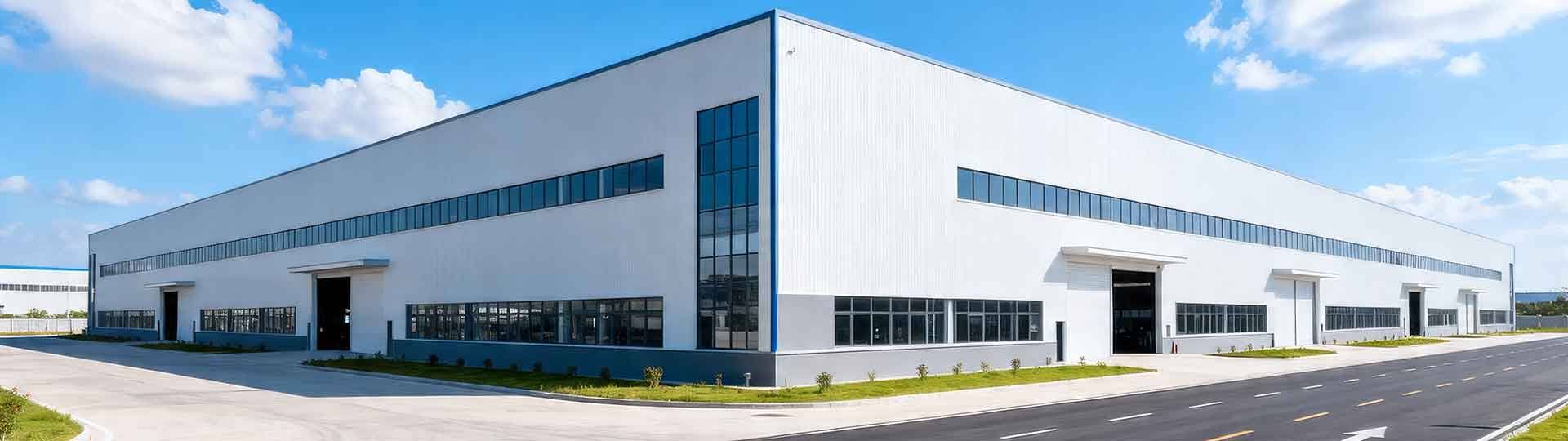
Industrial chillers are an indispensable core accessory device in laser processing equipment. Through precise closed-loop water cooling circulation, they provide a constant working temperature for the laser, ensuring that the equipment can operate stably and efficiently for a long time. In simple terms, without an efficient chiller, there would be no stable and reliable laser processing. Below is the sharing from Jianlong Hydraulic Technology's staff, for your reference!
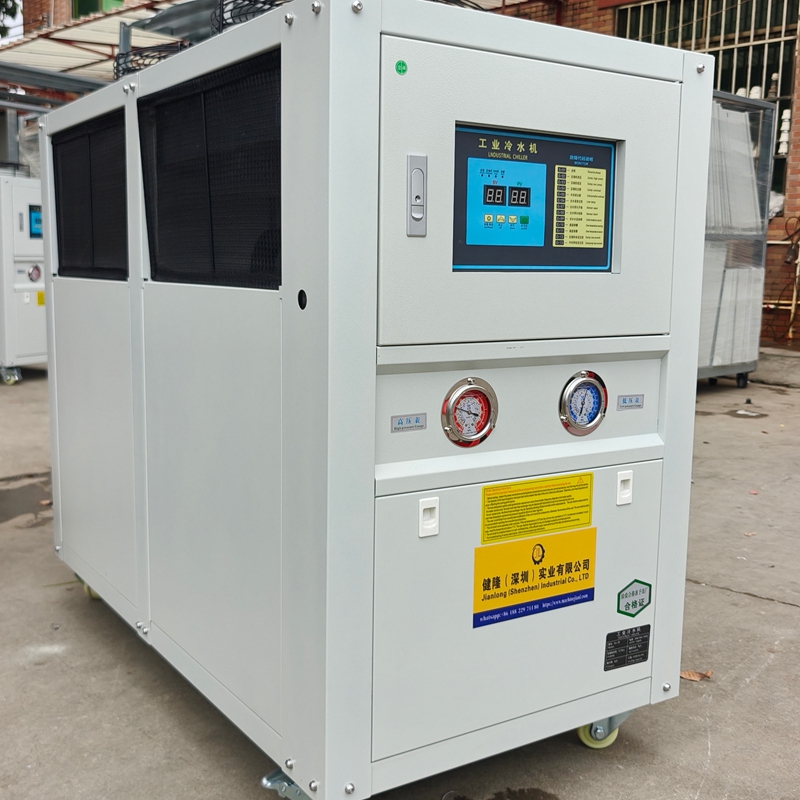
1. Why is a dedicated chiller necessary for a laser device?
When a laser device is in operation, its laser source and optical components generate a large amount of heat. If not controlled in time, it will cause a series of problems:
1.1 Ensuring processing accuracy and stability: Even a slight temperature fluctuation can affect the wavelength, beam quality, and output power of the laser, directly resulting in rough cutting surfaces, unstable welding, or uneven marking effects. Stable cooling is the prerequisite for consistent processing results.
1.2 Effectively protecting the core optical components: Overheating is one of the main reasons for the aging and damage of core components such as the laser source, crystal, and optical lenses. Effective cooling can significantly reduce the thermal stress of these expensive components.
1.3 Extending the equipment's service life: Keeping the equipment temperature within a reasonable range can significantly reduce the failure rate, extend the overall service life of the laser device, and reduce long-term operating costs.
2. Main types of laser equipment and cooling solutions
There are many types of laser equipment on the market, and the corresponding chillers are "machine-specific". Here are the cooling characteristics of several common types:
2.1 Fiber laser
Common application fields: Metal cutting, welding, cleaning
Cooling characteristics and requirements: High power, dual-loop cooling; usually, two independent cooling circuits are required, one for cooling the laser body and the other for cooling the cutting head simultaneously to cope with the huge heat generated by kilowatt-level power.
2.2 CO₂ laser
Common application fields: Non-metal cutting, engraving (wood, acrylic, leather, etc.)
Cooling characteristics and requirements: Continuous, reliable temperature control; during long-term operation of the machine, a stable water cooling system can effectively prevent the laser tube from power attenuation or beam deformation due to overheating.
2.3 Ultraviolet/ultrafast laser
Common application fields: Precision microprocessing, semiconductors, medical
Cooling characteristics and requirements: Ultra-high precision temperature control; for these laser devices, ±1°C might be sufficient, but for ultraviolet lasers, a high precision of ±0.1°C is required to ensure the stability and repeatability of the beam.
2.4 Portable laser equipment
Common application fields: On-site welding, cleaning
Cooling characteristics and requirements: Compact, integrated; a small-sized, rack-mounted chiller is needed to facilitate integration into mobile devices while maintaining stable cooling.
3. Core indicators to consider when selecting a chiller for your laser equipment
When choosing a chiller for your laser equipment, you need to focus on the following parameters to ensure a proper match:
3.1 Cooling capacity: This is the most core indicator, representing the ability of the chiller to remove heat. It needs to be precisely calculated based on the heat generation of the laser equipment (usually higher than the output power).
3.2 Temperature control accuracy: This determines the stability of the temperature control. For CO₂ lasers, ±1°C might be sufficient, but for ultraviolet lasers, a high precision of ±0.1°C is required to ensure the stability and repeatability of the beam.
3.3 Water flow rate and head pressure: Ensure sufficient cooling water circulation to avoid situations where the "nominal cooling capacity is sufficient but the laser tube still gets hot".
3.4 Water quality and materials: High-quality chillers use corrosion-resistant materials and filtration systems to prevent impurities or copper rust from blocking and damaging the precise internal structure of the laser equipment.
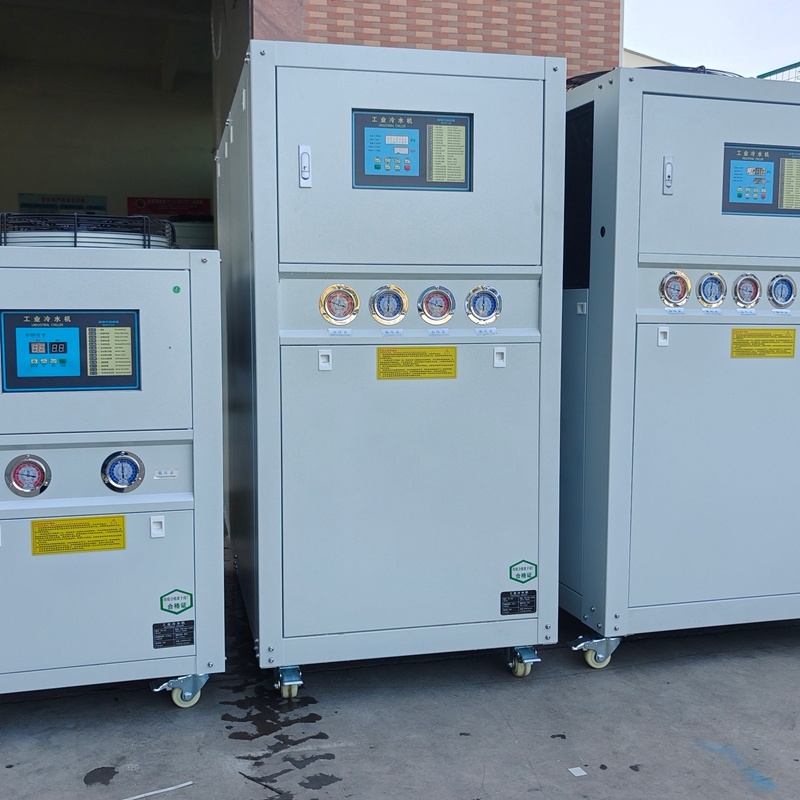
The industrial laser cooling machine market is steadily growing along with the popularization of laser technology. According to the data, the global market size was approximately 5.94 billion yuan in 2024 and is expected to approach 8.19 billion yuan by 2031. This growth is mainly attributed to the wide application of lasers in cutting, welding, marking, 3D printing, etc. At the same time, the equipment is developing towards higher precision, multi-channel, and intelligent features (such as remote monitoring, fault warning). Are you currently selecting a cooling machine for a specific laser equipment (such as fiber cutting machines or ultraviolet marking machines), or do you want to know the general selection standards for a certain power range? Please tell me your specific situation, and I can help you sort out more precise selection comparison parameters. Currently, Jianlong Hydraulic Technology can customize hydraulic machines ranging from 10 to 5,000 tons (with products such as cooling machines and air compressors as accessories), and all hydraulic machines have passed CE certification and fully comply with the EU Machinery Directive (2006/42/EC). If you have any purchasing needs, please contact us (you can also scan the following WhatsApp QR code), and Jianlong Hydraulic Technology will provide you with personalized, customized professional solutions and serve you wholeheartedly.

Contact: jojo
Phone: +8618988729072
E-mail: lifuyan78@gmail.com
Whatsapp:8618988729072
Add: Guangdong Province, China TianHe District, GuangZhou Num 899