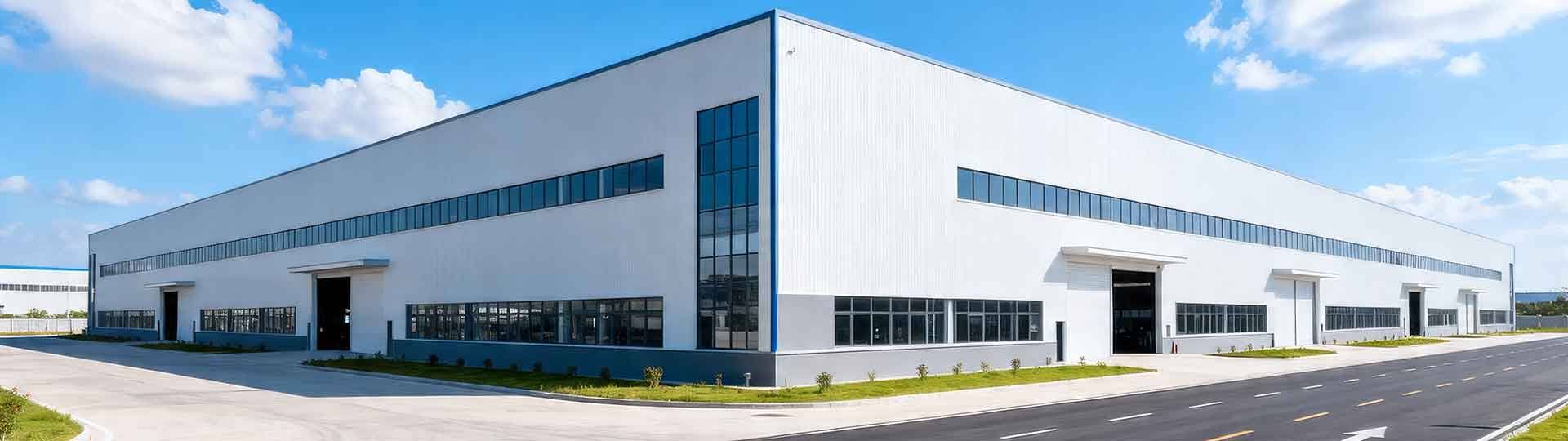
The applications of industrial chillers in the electronics and semiconductor industries can be summarized as follows: they are critical infrastructure for ensuring precision manufacturing yield and improving equipment stability. In this extremely temperature-sensitive industry, the role of chillers has transcended simple cooling, permeating every aspect from micro-chip manufacturing to large-scale plant management. Below is a sharing from Jianlong Hydraulic Technology for your reference!
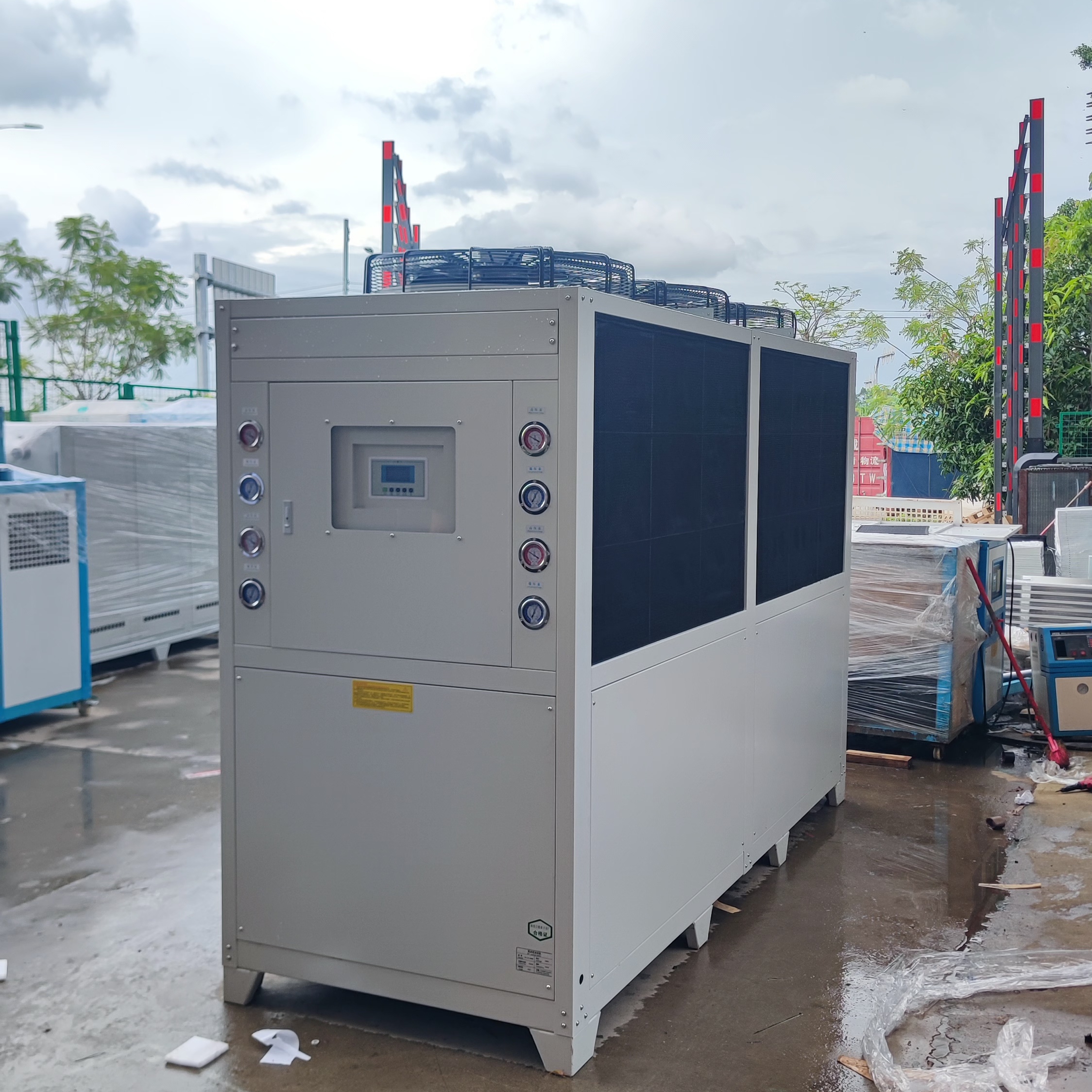
1. Core Function: Why is Precision Temperature Control Indispensable in Semiconductor Manufacturing?
As chip manufacturing processes advance towards the nanoscale, temperature control directly determines product yield and performance. Specifically, its functions are reflected in the following four points:
1.1 Ensuring Process Consistency and Yield: Processes such as etching, deposition, and photolithography in semiconductor manufacturing are extremely sensitive to ambient temperature. Even small temperature fluctuations can lead to deviations in critical wafer dimensions or uneven film thickness. Stable cooling ensures that each wafer is under the same thermal conditions, thereby reducing batch variations and improving production yield.
1.2 Efficiently Removing Process Heat: Equipment such as plasma etching and ion implantation generates enormous amounts of heat during operation. Precision closed-loop chillers can rapidly remove heat, prevent temperature drift, and ensure the continuous stability of high-power processes.
1.3 Protecting Precision Optics and Motion Systems: Equipment such as lithography machines and inspection platforms rely on nanometer-level positioning accuracy. Thermal expansion caused by temperature changes directly affects alignment accuracy. Chillers ensure measurement repeatability and accuracy by stabilizing the temperature of these sensitive subsystems.
1.4 Extending the Lifespan of Expensive Equipment: Stable temperature control effectively reduces thermal stress on equipment chambers, pumps, and mechanical structures, reduces maintenance frequency, and improves overall equipment efficiency (OEE), which is crucial for semiconductor wafer fabs.
2. Application Scenarios: From Plant Facilities to Core Processes
The application of industrial chillers in the electronics and semiconductor fields can be divided into two main categories: plant-level environmental control and process-level equipment cooling.
2.1 Plant and Environmental Control
Primarily used in cleanroom temperature and humidity control; to stably control the temperature and humidity of the entire cleanroom, providing a basic environmental guarantee for all precision equipment such as lithography and etching. For example, TSMC utilizes AI to optimize its chiller system, enabling its 12-inch wafer fab to save 120 million kWh of electricity annually, representing energy savings of 8%-17%.
2.2 Process Equipment Cooling
·Applications in Photolithography, Etching, and Deposition Equipment: Cools core process chambers such as plasma etching machines and CVD/PVD coating machines, removing heat generated by chemical reactions and ion bombardment. Extremely high precision is required, typically ±0.1°C.
·Wafer Dicing and Inspection: Cools high-speed spindle motors or lasers to prevent thermal deformation from affecting dicing accuracy; provides thermal stability for inspection optical systems. For example, after adopting a high-precision chiller, a chip dicing laboratory reduced temperature fluctuations to ±0.08°C, significantly lowering the defect rate.
·Photoresist Coating and Development Equipment: Provides rapid and uniform cooling to wafers (e.g., via cold trays), ensuring uniform photoresist coating and stability of the process window. For example, 12-inch wafer cold trays achieve surface cooling precision of ±0.05°C.
• Electronic Assembly and Testing: Prevents solder paste failure and component performance drift caused by high temperatures during PCB reflow soldering and component testing, ensuring product quality. Suitable for reflow oven cooling zones and chip test bench temperature control.
3. Mainstream Technology Solutions and Selection Considerations
For different scenarios, the following chiller technologies are currently the main options:
3.1 Compressor-type Chillers
Utilize a vapor compression refrigeration cycle, similar to a household air conditioner. Temperature control accuracy can reach ±0.1°C. Compressor-type chillers offer high cooling capacity and stable performance, making them the mainstream solution; suitable for most semiconductor equipment (etching, deposition, photolithography, etc.) and related plant systems.
3.2 Semiconductor Temperature Controllers
Utilize the Peltier effect, achieving cooling or heating by changing the direction of current. Extremely high temperature control accuracy, reaching ±0.05°Cor higher. Semiconductor temperature controllers offer high precision and low cooling capacity; with no moving parts, they are compact and vibration-free, making them particularly suitable for high-precision local temperature control in areas such as wafer cold disks and laser packaging where high precision and stability are required.
3.3 Key Selection Indicators
When selecting semiconductor equipment, the following parameters are typically the most important:
·Temperature Control Accuracy: This is the primary indicator. Process equipment usually requires ±0.1°C, with some precision components requiring ±0.05°C or higher.
·Heat Dissipation Capacity:Select a cooling capacity that matches the equipment's heat load to ensure stable temperature control even under high loads.
· Stability and Reliability: The equipment must support continuous operation for extended periods (24/7), exhibiting low vibration and low noise characteristics, and equipped with intelligent monitoring and multi-level alarm protection.
·Communication Functionality:Support for industrial communication protocols such as RS485, RS232, and Ethernet facilitates integration into the factory's automation control system, enabling remote monitoring and data acquisition.
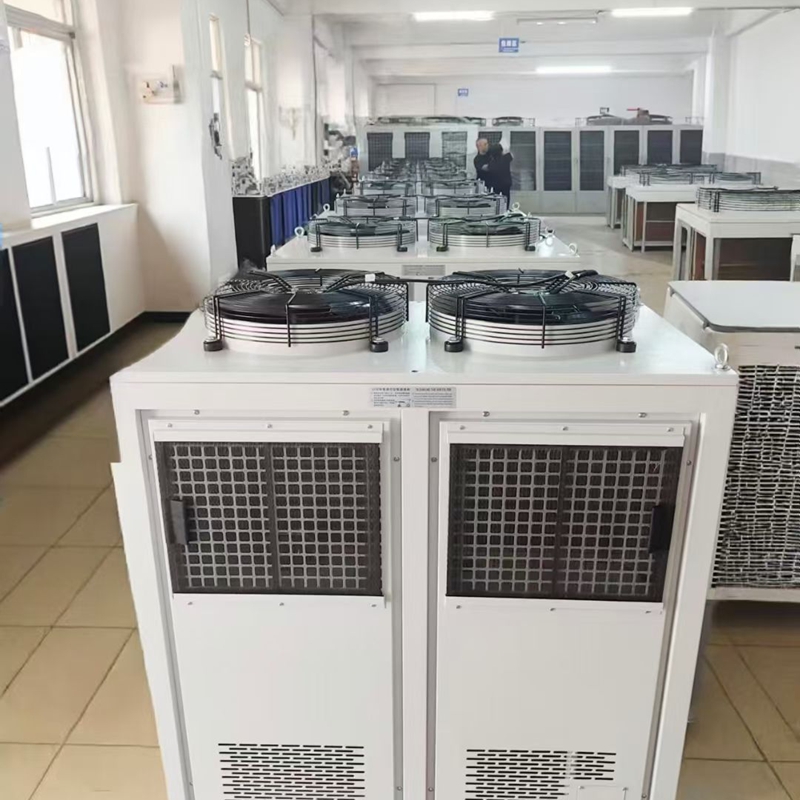
Are you selecting a chiller for specific semiconductor equipment (such as etching machines, lithography machines, or wafer inspection platforms), or are you looking for a factory-grade air conditioning solution for a specific power range? Tell us the specific equipment type, and we can help you refine your selection parameters. Currently, Jianlong Hydraulic Technology can customize hydraulic presses ranging from 10 to 5000 tons (with supporting products such as chillers and air compressors). All hydraulic presses are CE certified and fully comply with the EU Machinery Directive (2006/42/EC). Our products are sold to Europe and America, including Germany, the United States, Mexico, and Portugal. If you have any purchasing needs, please contact us (or scan the WhatsApp QR code below). Jianlong Hydraulic Technology will provide you with personalized and customized professional solutions and is dedicated to serving you.

Contact: jojo
Phone: +8618988729072
E-mail: lifuyan78@gmail.com
Whatsapp:8618988729072
Add: Guangdong Province, China TianHe District, GuangZhou Num 899