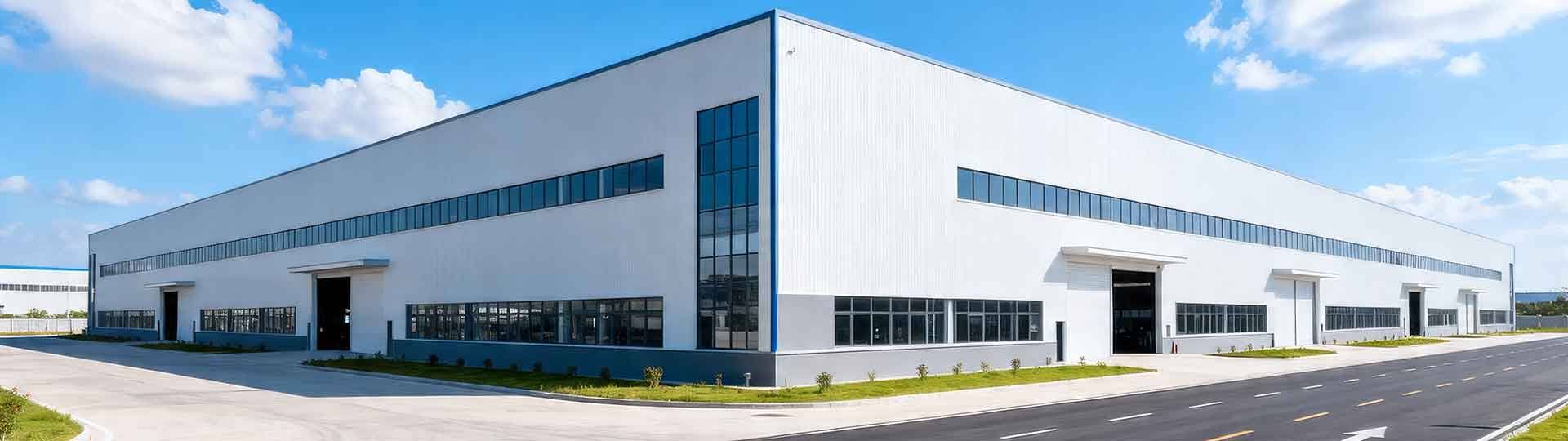
In the chemical and pharmaceutical industries, industrial chillers have evolved from simple auxiliary equipment to core process equipment that ensures production safety, determines product quality, and improves output efficiency. The production processes in these two industries are often accompanied by intense thermal effects—whether it's the heat released from chemical reactions or the temperature fluctuations generated by biological fermentation—all requiring precise temperature control systems to maintain stability. This is precisely where the core value of industrial chillers lies. Below, Jianlong Hydraulic Technology shares some insights for your reference when purchasing!
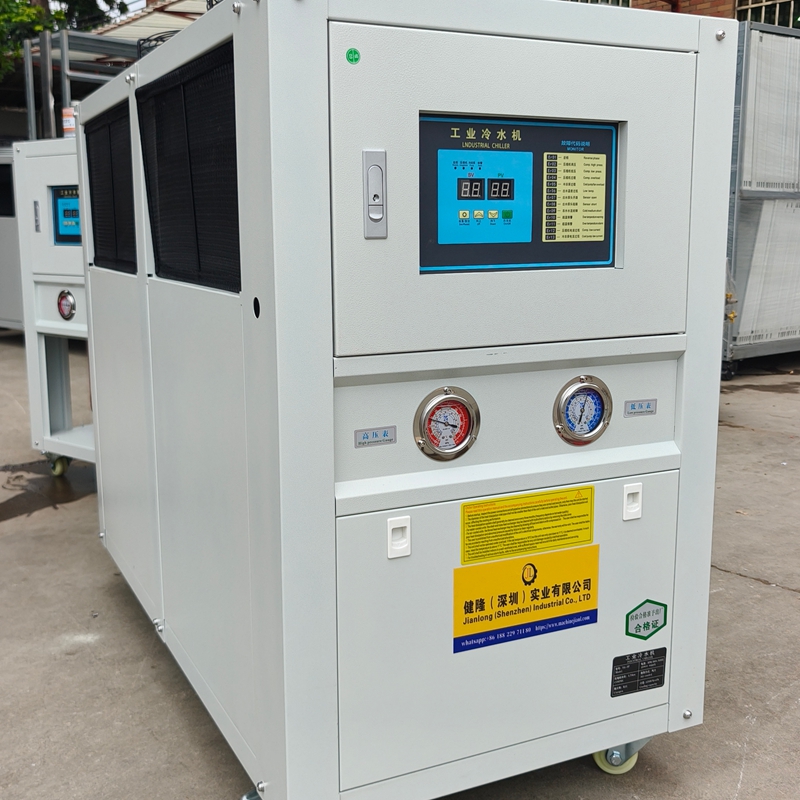
1. Key Applications in the Chemical Industry
The reaction processes in the chemical industry are extremely sensitive to temperature. Excessive temperature can lead to increased side reactions, product decomposition, and even safety accidents; excessively low temperatures can cause reaction stagnation and low efficiency. The intervention of chillers makes "precise temperature control" possible.
1.1 Cooling of Reactors (Core Application)
In chemical production, most reactions (such as polymerization, esterification, nitration, etc.) are exothermic. As the reaction proceeds, the temperature inside the reactor rises rapidly. A dedicated chiller for reactors delivers chilled water to the reactor jacket or coils, promptly removing heat and precisely controlling the reaction temperature within the required process range, ensuring stable reaction operation.
• Process Value: Precise temperature control effectively suppresses side reactions, increases the yield of the main product, and prevents coking or material decomposition caused by localized overheating, significantly improving product quality.
• Equipment Features: Chemical environments often involve corrosive media; therefore, these chillers typically use stainless steel or titanium heat exchange tubes and are equipped with comprehensive corrosion protection measures.
1.2 Low-Temperature Crystallization and Material Cooling Many chemical products require cooling to achieve crystallization separation or rapid cooling of high-temperature outputs to prevent deterioration. For example, in fine chemical production, using a low-temperature chiller to provide a chilled liquid at -20°C to -40°C enables the low-temperature crystallization and refining of specific components.
1.3 Special Safety Requirements – Explosion-Proof Design Chemical production environments (such as solvent workshops and raw material storage tank areas) often contain flammable and explosive gases. Explosion-proof low-temperature chillers are essential in these environments. Its electrical components utilize explosion-proof enclosures, and the entire machine complies with explosion-proof standards such as Ex d IIB T4, ensuring safe operation in hazardous environments.
2. Professional Applications in the Pharmaceutical Industry
The pharmaceutical industry's stringent temperature requirements are not only related to production efficiency but also directly affect the safety, efficacy, and compliance of drugs.
2.1 Temperature Control in Biofermentation Tanks (Core Application)
In the production of antibiotics (such as penicillin), vitamins, and amino acids, the microbial fermentation process releases a large amount of metabolic heat. If the temperature is out of control, it can inhibit bacterial activity and reduce yield, or even lead to bacterial death and the scrapping of the entire tank.
• Temperature Control Requirements: The fermentation process typically requires precise temperature control within the 20-30℃ range, with temperature fluctuations ≤ ±1℃ to ensure bacterial activity and metabolic stability. Some high-precision models can achieve a temperature control accuracy of ±0.1℃.
• Cooling Method: Circulation cooling is achieved through the fermentation tank jacket or built-in coil to remove fermentation heat.
2.2 Temperature Control in the Synthesis and Purification of Active Pharmaceutical Ingredients (APIs)
The synthesis of APIs is complex, often involving multiple stages such as low-temperature reactions (e.g., Grignard reactions require temperatures below -20°C), low-temperature crystallization and purification, and vacuum drying and cooling.
• Low-Temperature Reactions: The synthesis of certain drug intermediates must be carried out at extremely low temperatures to prevent side reactions. Dedicated low-temperature chillers can provide a freezing medium of -30°C to -40°C.
• Crystallization and Extraction: Precise cooling promotes the crystallization of the target component from the solution, achieving separation and purification. The temperature control stability of the chiller in this stage directly affects the purity and yield of the crystals.
2.3 Environmental Control in Pharmaceutical Cleanrooms
Pharmaceutical production (especially sterile preparations) has strict requirements for environmental temperature and humidity. Chillers not only provide chilled water for the HVAC system but also maintain a constant temperature and humidity environment in clean areas, which is an important guarantee for GMP compliance.
2.4 Pharmaceutical Storage and Laboratory Use
• Low-Temperature Storage: Some active pharmaceutical ingredients, vaccines, and biological products require storage at 2-8℃ or lower. Chillers can provide a cooling source for cold storage facilities.
• Laboratory Applications: During the pharmaceutical research and development stage, chillers provide precise temperature control for analytical instruments such as polarimeters, refractometers, rotary evaporators, and viscometers, ensuring the accuracy of test results.
3. Core Technical Requirements for the Equipment
Unlike conventional industrial cooling, the chemical and pharmaceutical industries impose a series of stringent technical requirements on chillers:
3.1 Temperature Control Accuracy
Requires ±1℃, with some high-precision processes requiring ±0.1℃; ensuring reaction repeatability and product quality consistency.
3.2 Temperature Range
Can provide a wide range of refrigerants from -120℃ to +35℃; adaptable to different process stages such as low-temperature reactions, crystallization, and ambient temperature cooling.
3.3 Explosion-Proof Rating
Must meet Ex d IIB T4 or higher explosion-proof standards; suitable for chemical and pharmaceutical workshops where flammable vapors are present.
3.4 Corrosion Resistance
The heat exchanger uses corrosion-resistant materials such as stainless steel and titanium tubes; resisting corrosion from chemical media or pharmaceutical solutions.
3.5 Continuous Operation Capability
Supports 24/7/365 uninterrupted operation; chemical/pharmaceutical production is often a continuous process, and downtime is not allowed.
3.6 Material Compliance
Components in contact with the medium meet food-grade or pharmaceutical-grade requirements; ensuring no contamination of pharmaceuticals and meeting GMP standards.
3.7 Communication Integration
Supports RS485, Modbus, SCADA, and other communication protocols; facilitates integration with the factory's distributed control system (DCS) for automated management.
4. Equipment Type Selection
4.1 Air-cooled: Flexible installation, no cooling tower required, suitable for small to medium-sized operations or areas with scarce water resources.
4.2 Water-cooled: Higher cooling efficiency and more stable operation, suitable for the large cooling capacity requirements of large chemical plants and pharmaceutical factories. Well-known brands such as Trane's RTAC series use wide-range cooling technology, providing uninterrupted cooling throughout the year in environments ranging from -18℃ to 52℃. In summary, industrial chillers play the following core roles in the chemical and pharmaceutical industries:
• Temperature anchor" in reaction processes: Precisely removes reaction heat, ensuring the reaction proceeds within the optimal temperature window, improving yield and quality.
• Gatekeeper" for pharmaceutical safety: Maintains the purity of active pharmaceutical ingredients, the activity of biological products, and storage safety through a stable low-temperature environment.
• Firewall" for safe production: The application of explosion-proof chillers effectively reduces the operational risks in flammable and explosive environments.
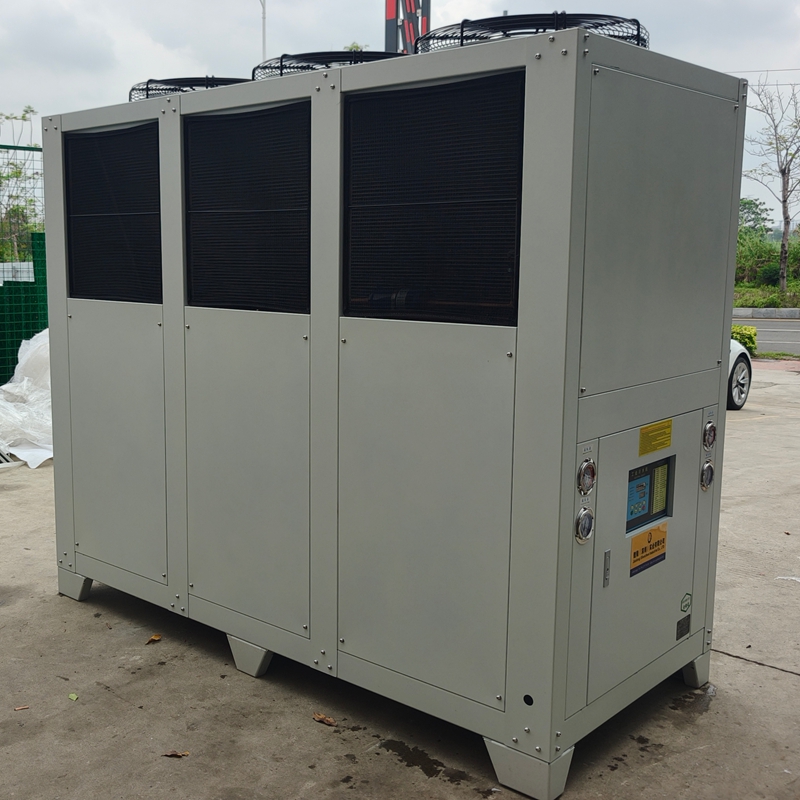
Whether it's the powerful cooling of chemical reactors or the precise temperature control of pharmaceutical fermenters, industrial chillers are the core driving force behind the smooth operation of these complex processes. Are you primarily focused on powerful cooling of reactors or precise temperature control of fermenters/bioreactors? Tell us your specific process type, and we can help you further clarify the cooling capacity calculations and temperature control accuracy requirements when selecting a chiller. Currently, Jianlong Hydraulic Technology can customize hydraulic presses ranging from 10 to 5000 tons (with supporting products such as chillers and air compressors). All hydraulic presses are CE certified and fully comply with the EU Machinery Directive (2006/42/EC). Our products are sold to Europe and America, including Germany, the United States, Mexico, and Portugal. If you have any purchasing needs, please contact us (or scan the WhatsApp QR code below). Jianlong Hydraulic Technology will provide you with personalized and customized professional solutions and is dedicated to serving you.

Contact: jojo
Phone: +8618988729072
E-mail: lifuyan78@gmail.com
Whatsapp:8618988729072
Add: Guangdong Province, China TianHe District, GuangZhou Num 899