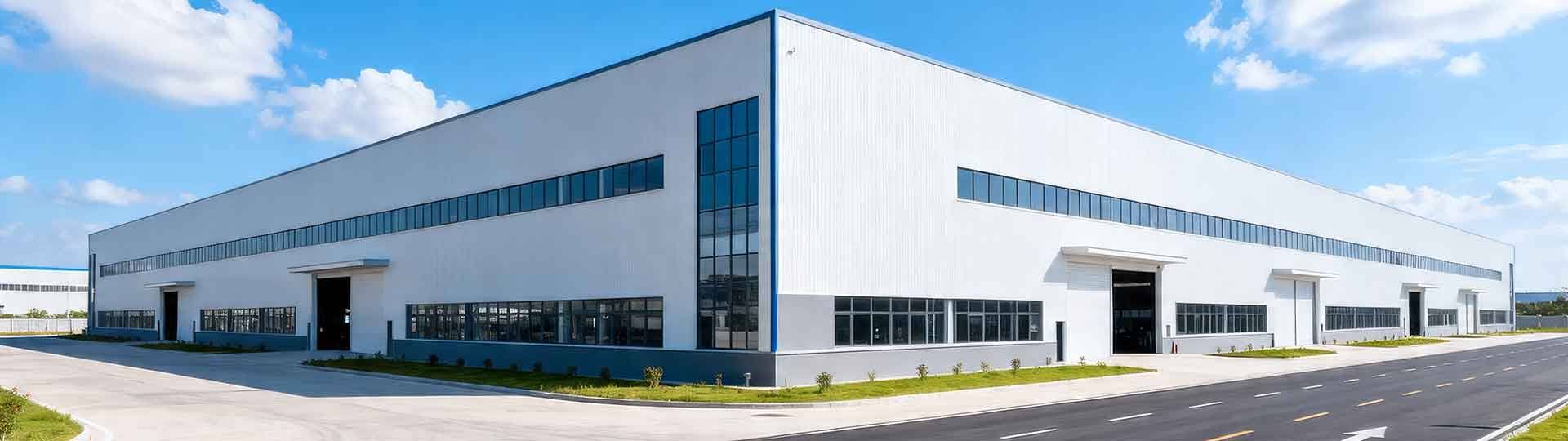
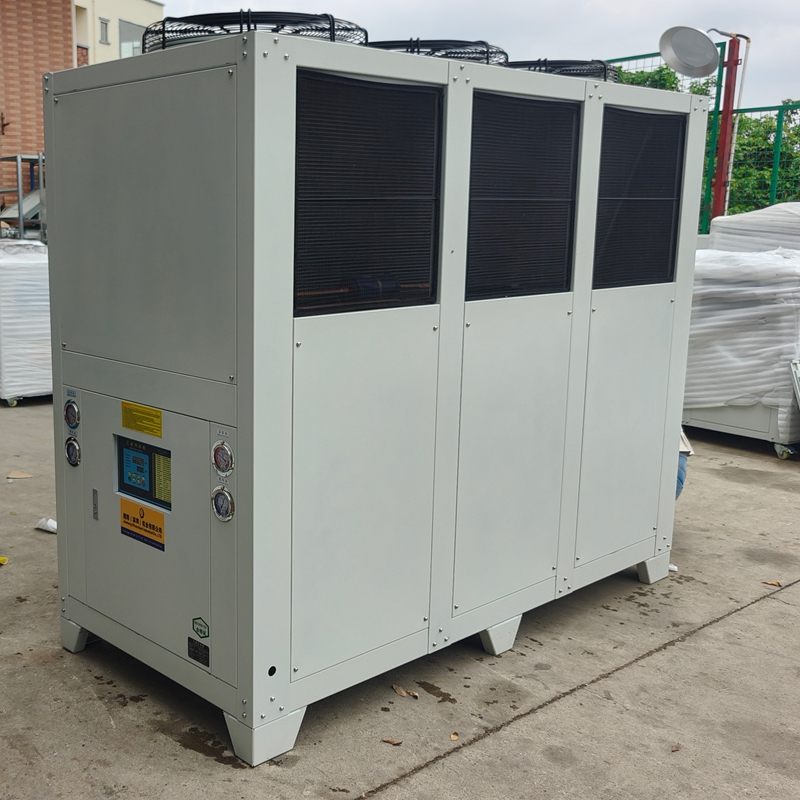
Industrial chillers are vital auxiliary equipment in electroplating and surface treatment production lines. Their primary function is to provide stable, low-temperature cooling for electroplating tanks, anodizing tanks, cleaning equipment, and related processes, thereby ensuring coating quality, boosting production efficiency, and extending equipment lifespan. The following information is provided by Jianlong Hydraulic Technology to assist with your procurement decisions.
1. Why the Electroplating Industry Needs Industrial Chillers
During electroplating, the passage of electric current through the electrolyte generates significant heat, and chemical reactions also release thermal energy. If the bath temperature rises unchecked, it can lead to:
1.1 Uneven coating thickness
1.2 Rough, blackened, or burnt coating surfaces
1.3 Imbalance in bath composition
1.4 Decomposition and failure of additives
1.5 Reduced product yield
1.6 Accelerated corrosion of electroplating equipment
Industrial chillers use a circulating cooling system to remove excess heat, maintaining the bath temperature within the required process range.
2. Key Application Scenarios in the Electroplating Industry
2.1 Nickel Plating Process Cooling
Nickel plating typically requires the bath temperature to be maintained between 40°C and 60°C.
2.1.1 Industrial chillers enable:
• Precise temperature control
• Enhanced coating brightness
• Improved adhesion
• Reduction of pinhole and pitting defects
2.1.2 Suitable for:
• Decorative nickel plating
• Electroless nickel plating
• Electronic nickel plating
• Hardware nickel plating
2.2 Chrome Plating Process Cooling
Chrome plating is a high-current-density process that generates substantial heat.
2.2.1 Chiller functions:
• Prevent excessive bath temperature
• Maintain coating hardness
• Improve surface finish
• Reduce crack formation
2.2.2 Widely used for:
• Automotive parts
• Mold manufacturing
• Hardware tools
• Hydraulic components
2.3 Zinc Plating Production Lines
In continuous zinc plating and barrel zinc plating processes, the temperature stability of the bath directly affects coating uniformity. 2.3.1 Industrial chillers can:
• Control electrolyte temperature fluctuations
• Enhance corrosion resistance
• Ensure consistent plating thickness
2.4 PCB Electroplating
2.4.1 PCB manufacturing processes such as:
• Electroless copper plating
• Electrolytic copper plating
• Tin plating
• Gold plating
all require strict temperature control.
2.4.2 Chiller advantages:
• Temperature control precision of ±1°C or even ±0.5°C
• Improved electrical conductivity
• Guaranteed circuit precision
• Reduced defect rates
2.5 Anodizing
During the anodizing of aluminum alloys, the temperature of the anodizing bath generally needs to be maintained between 15°C and 25°C.
2.5.1 Industrial chillers can:
• Prevent burning of the oxide film
• Improve film uniformity
• Enhance wear resistance
• Improve coloring results
2.5.2 Application areas:
• Architectural aluminum profiles
• Mobile phone casings
• Electronic product housings
• Aerospace components
2.6 Electroless Plating
Electroless plating does not require an external electric current, but the reaction process continuously generates heat.
2.6.1 Chillers are used to:
• Control reaction rates
• Prevent deactivation of the plating solution
• Extend the service life of the chemical solution
• Ensure plating consistency
3. Applications in the Surface Treatment Industry
In addition to traditional electroplating, industrial chillers are widely used in:
3.1 Pickling lines
Controlling acid solution temperature to reduce evaporative loss.
3.2 Phosphating
Maintaining the stability of the phosphating solution and enhancing rust resistance.
3.3 Electrophoretic coating
Controlling the temperature of the electrophoresis bath to ensure a uniform paint film.
3.4 Pre-treatment for spraying
Cooling the circulating water system to improve production stability.
3.5 Ultrasonic cleaning
Preventing the cleaning solution temperature from becoming too high and affecting cleaning performance.
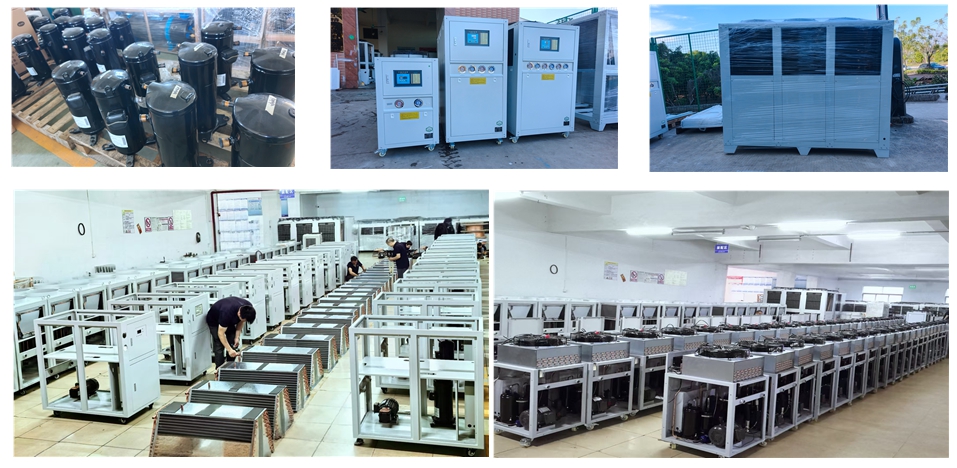
Industrial chillers play a crucial role as "temperature stabilizers" in the electroplating and surface treatment industries. By continuously removing heat generated during the process, it maintains plating and treatment solutions at optimal operating temperatures, thereby improving coating quality, reducing defect rates, extending chemical solution lifespan, and enhancing overall production efficiency. Industrial chillers have become essential auxiliary equipment for ensuring product quality and production stability in processes such as nickel, chrome, and zinc plating, PCB plating, anodizing, and electroless plating. Currently, Jianlong Hydraulic Technology offers custom-built hydraulic presses ranging from 10 to 5,000 tons (with compatible peripherals such as chillers and air compressors). All presses are CE certified and fully compliant with the EU Machinery Directive (2006/42/EC), with products exported to markets in Europe and the Americas, including Germany, the USA, Mexico, and Portugal. If you have procurement needs, please contact us (or scan the WhatsApp QR code below); Jianlong Hydraulic Technology is dedicated to providing you with personalized, customized professional solutions.

Contact: jojo
Phone: +8618988729072
E-mail: lifuyan78@gmail.com
Whatsapp:8618988729072
Add: Guangdong Province, China TianHe District, GuangZhou Num 899