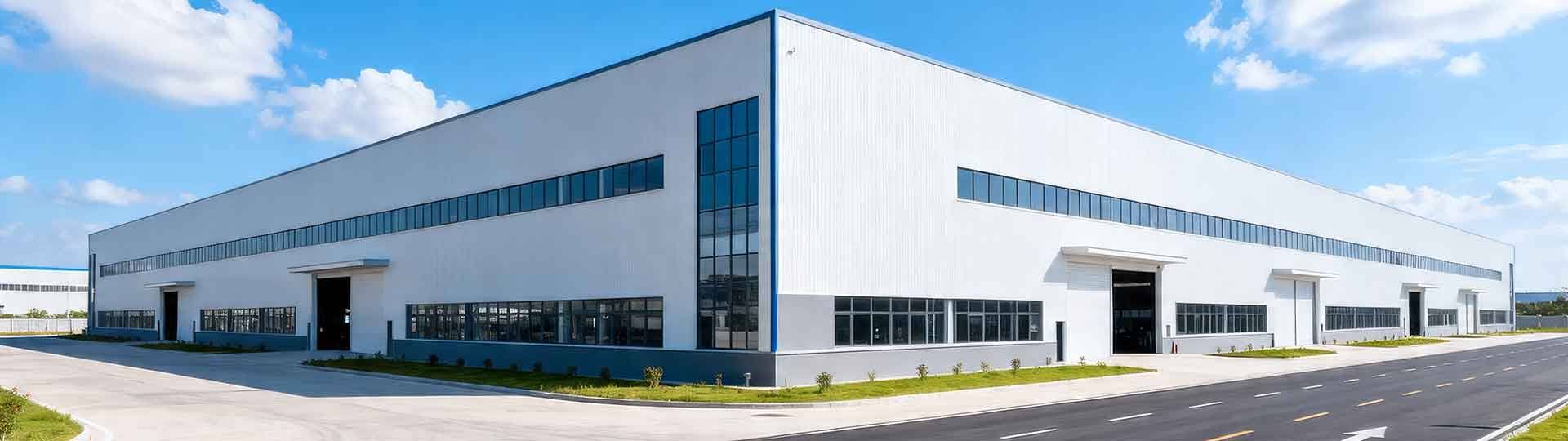
In the fields of machinery and metalworking, industrial chillers play a pivotal role. Rather than serving as direct tools for metal processing, they act as the core "unsung heroes" working behind the scenes to ensure that high-precision equipment operates stably, efficiently, and continuously over extended periods. This sector encompasses a wide range of processes—from traditional metal cutting to advanced laser processing—with the primary objectives being heat management, precision assurance, and equipment longevity. Below, the editorial team at Jianlong Hydraulic Technology shares specific application scenarios within this domain.
1. Core Application Scenarios
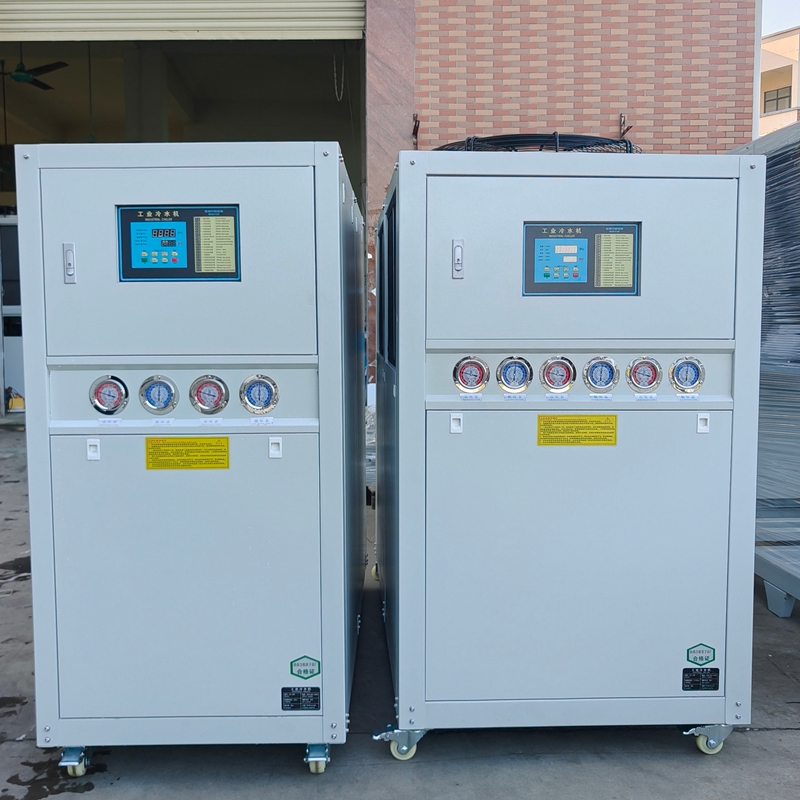
The application of industrial chillers in machinery and metalworking can be broadly categorized into three main areas: CNC Machine Tools (Cutting/Grinding), Laser Processing (Cutting/Welding/Cladding), and Other Auxiliary Equipment.
1.1 CNC Machine Tools and Precision Machining
1.1.1 CNC Machine Tools (Lathes, Milling Machines, Machining Centers)
• Objects of Cooling: High-speed electric spindles, servo motors, hydraulic oil, cutting fluids.
• Core Function and Value:Prevents spindle overheating and avoids thermal deformation that could compromise machining precision; extends the service life of expensive spindles.
1.1.2 CNC Grinding Machines and Engraving/Milling Machines
• Objects of Cooling: Grinding spindles, electric spindles.
• Core Function and Value: Ensures the required surface finish for precision grinding operations. These machines are extremely sensitive to temperature fluctuations and often require high-precision temperature control with an accuracy of ±0.1°C.
1.1.3 EDM (Electrical Discharge Machining) Machines and Wire-Cut EDM Machines
• Objects of Cooling:Working fluids (e.g., EDM oil, deionized water).
• Core Function and Value: Rapidly dissipates the heat generated by electrical discharges, prevents wire electrode breakage, and ensures machining stability and surface quality.
1.2 Laser Processing
1.2.1 Laser Cutting Machines (Fiber/CO2)
• Objects of Cooling: Laser source (pump source), optical components (focusing lenses, mirrors), cutting head.
• Core Function and Value:Stabilizes laser output power, prevents thermal drift in optical components, and ensures clean, precise cut edges; simultaneously cools the cutting head to prevent damage caused by overheating. 1.2.2 Laser Welding Machines & Laser Cladding Equipment
• Objects Cooled: Laser source, optical system, welding head
• Core Function & Value: Features a dual-temperature control loop design (cooling the laser and optics separately) to ensure a stable welding process and minimize spatter; prevents thermal deformation during the cladding process.
1.2.3 Metal 3D Printers (SLM/SLS)
• Objects Cooled: Laser source, optical system, build chamber
• Core Function & Value: Maintains a constant-temperature environment during the layer-by-layer printing process, thereby reducing part warping and improving print success rates and part density.
1.3 Auxiliary Processes & General Equipment
1.3.1 Hydraulic Systems (Punch Presses, Hydraulic Presses, Injection Molding Machines)
• Objects Cooled:Hydraulic oil
• Core Function & Value: Cools the hydraulic oil to prevent overheating—which can lead to reduced viscosity, system leaks, and seal degradation—thereby ensuring stable power transmission.
1.3.2 Welding Equipment (TIG/MIG Welders)
• Objects Cooled: Internal power components of the welder, welding torch
• Core Function & Value: Ensures the welder can operate continuously for extended periods without failure—a capability that is particularly critical for automated welding workstations.
1.3.3 Metal Heat Treatment & Metallurgical Equipment
• Objects Cooled: Induction coils, cooling rollers, quenching fluids
• Core Function & Value:Rapidly cools (quenches) high-temperature metals or protects induction heating equipment, ensuring that the material achieves the required metallographic structure and hardness.
2. Irreplaceable Value: Why Is It Essential?
You might ask: Why can't we simply use a standard water circulation system for cooling? The reason is that industrial chillers provide a level of value that conventional cooling methods simply cannot match:
2.1 Ensuring "Micron-Level" Machining Precision
In CNC machining, spindle bearings generate a significant amount of heat during high-speed rotation, causing the spindle shaft to expand (thermal elongation). If this heat is not precisely dissipated, the dimensions of the machined parts will deviate by several—or even tens of—microns, directly resulting in product rejection. The constant temperature provided by a chiller serves as the first line of defense in ensuring processing precision.
2.2 Protecting Expensive "Heart" Components
Whether it is an electric spindle costing tens of thousands of yuan or a laser unit costing hundreds of thousands, their greatest nemesis is "heat." Overheating can directly lead to internal coil burnout, laser diode degradation, or the cracking of optical lenses. A professional chiller strictly controls the temperature of these core components, keeping them within a safe operating range and significantly extending the equipment's service life.
2.3 Enabling All-Weather, Continuous Production
In automated factories, equipment often requires uninterrupted, 24-hour operation. Conventional cooling methods (such as fans or tap water) are unable to cope with the heat load that accumulates over extended periods, ultimately resulting in equipment shutdown due to thermal protection triggers. Industrial chillers continuously and stably dissipate heat, ensuring the production line operates reliably 24/7 and thereby boosting overall production efficiency (OEE).
3. Technical Solutions: From ±1°C to ±0.1°C
Different manufacturing processes have vastly different cooling requirements; consequently, industrial chillers have evolved into various distinct technical solutions:
3.1 Standard Temperature Control (±0.5°C ~ ±1°C)
Suitable for the majority of CNC machine tool spindles, hydraulic systems, and standard laser cutting machines. For instance, the CW-6000 chiller—often paired with CNC milling machines—offers a cooling capacity of approximately 3000W and a temperature control accuracy of ±0.5°C, which is more than sufficient to meet the cooling demands of the spindle.
3.2 Precision Temperature Control (±0.1°C or Higher)
Suitable for ultra-precision CNC grinding machines, high-end Electrical Discharge Machines (EDM), and certain lasers that are extremely sensitive to temperature fluctuations. For example, the CWUP-20 series chiller delivers a temperature control accuracy of up to ±0.1°C—a critical capability for preventing thermal drift in grinding spindles and ensuring mirror-finish processing results.
3.3 Dual-Circuit / Multi-Channel Cooling
This is the "standard configuration" for fiber lasers. This is because the main laser body (pump source) and the optical components (cutting head) require different cooling temperatures and levels of coolant purity. Dual-circuit chillers (such as the CWFL series) are capable of providing precise cooling to two separate components simultaneously and independently, thereby avoiding the issues associated with a "one-size-fits-all" cooling approach.
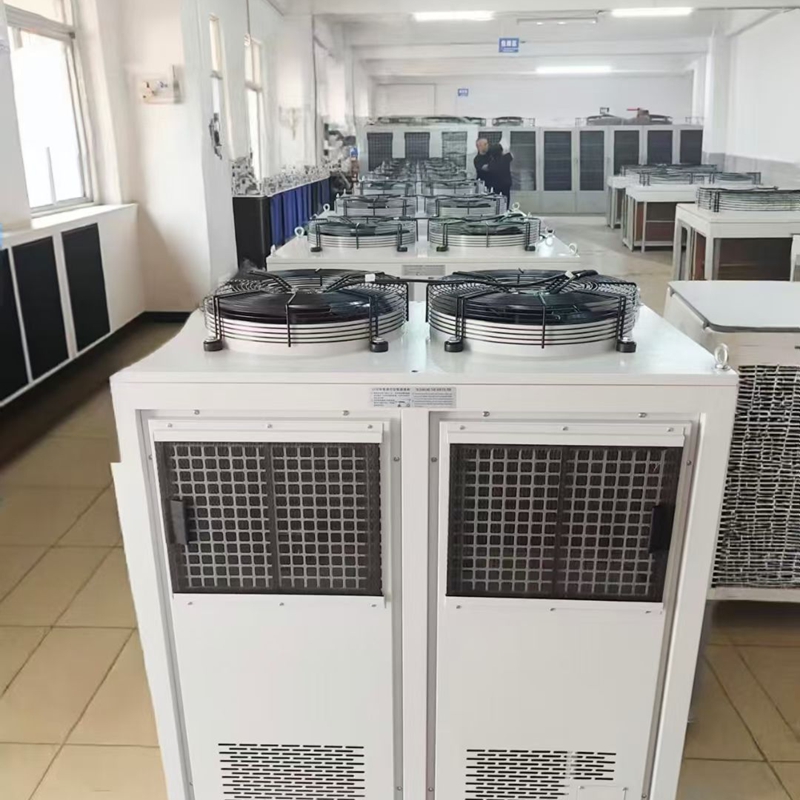
In summary, within the fields of machinery and metal processing, an industrial chiller serves as a "value-preserving" asset. Through precise thermal management, it ensures that machine tools produce high-precision parts, lasers emit stable, high-energy beams, and core components enjoy extended operational lifespans. Amidst the prevailing trends of intelligent and precision manufacturing, a stable cooling system has become an indispensable piece of infrastructure for modern factories. Is your primary focus on cooling CNC machine tools (e.g., spindles or cutting fluids), or on supporting laser equipment (e.g., for cutting or welding)? Let us know your specific equipment type, and we can assist you in identifying the precise selection parameters best suited to your needs. Currently, Jianlong Hydraulic Technology offers custom hydraulic presses ranging from 10 to 5,000 tons (complete with ancillary equipment such as chillers, air compressors, etc.). All our hydraulic presses are CE certified and fully compliant with the EU Machinery Directive (2006/42/EC). Our products are exported globally to markets across Europe and the Americas—including Germany, the United States, Mexico, Portugal, and beyond. If you have any procurement requirements, please contact us (you may also scan the WhatsApp QR code below); Jianlong Hydraulic Technology is dedicated to providing you with personalized, customized, and professional solutions, and we look forward to serving you.

Contact: jojo
Phone: +8618988729072
E-mail: lifuyan78@gmail.com
Whatsapp:8618988729072
Add: Guangdong Province, China TianHe District, GuangZhou Num 899